
Summary George T. Pack, MD (1898 – 1969, Yale MED 1922) was the surgical oncologist to world leaders in the mid-20th century. He traveled twice to operate on Argentina’s First Lady Eva Peron. In a 1960s lecture, “Impact of Illness on World History,” Dr. Pack shared details of Boston-based colleague Dr. Frank Lahey’s consultation with 32nd President Franklin D. Roosevelt, which inspired additional research in the secrecy surrounding FDR’s health and death. The Ravi D. Goel collection of George T. Pack Papers includes four hand-illustrated medical books, on anatomy, neurology, pathology, and physiology, while Dr. Pack was a Yale medical student (1918-1920). The Pack papers were recently donated to the Harvey Cushing / John Hay Whitney Medical Library of Yale University. (Yale Library finding aid)

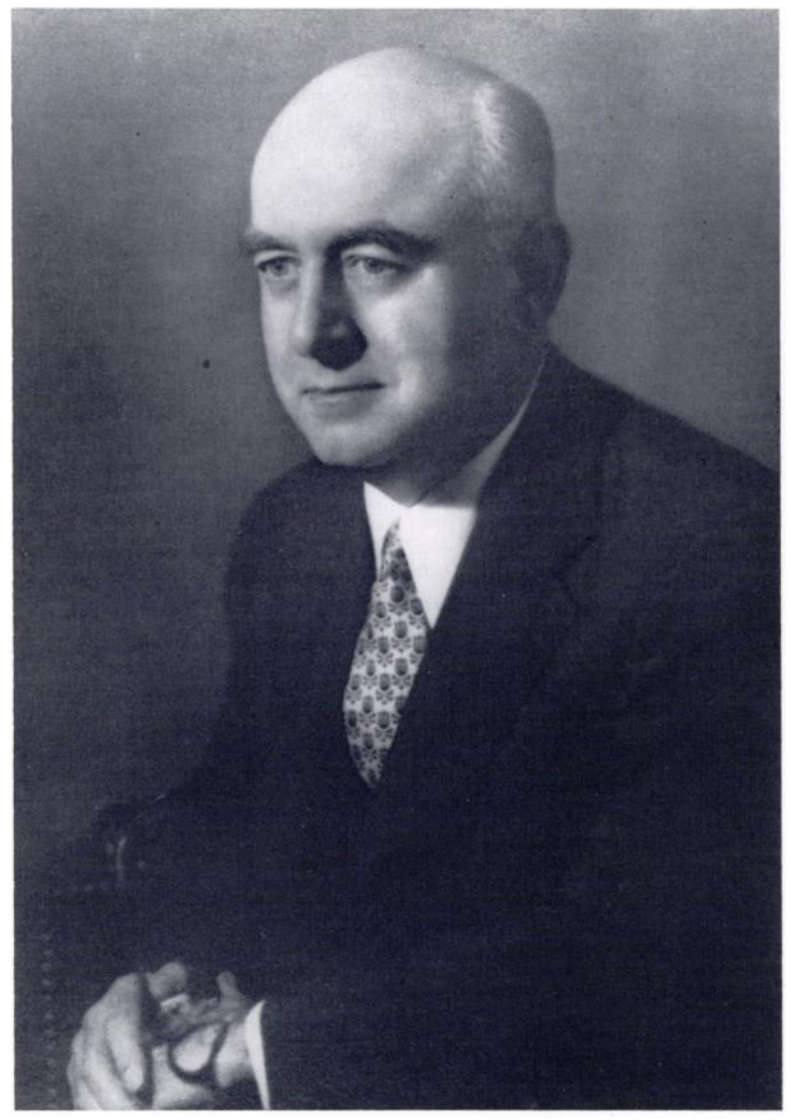
(Photo: Ariel (AJR Oct 1969))
George T. Pack, MD (1898 – 1969) was the surgical oncologist to world leaders in the mid-20th century.

In the Fall 1951, Dr. Pack traveled twice to operate on Argentina’s First Lady Eva Peron. “The Argentine Embassy in Washington had approached Dr George Pack, a surgeon at the Memorial Sloan-Kettering Center in New York, one month previously, and he was now summoned to Buenos Aires in the greatest secrecy.”1 According to a 2000 Lancet article, Dr. Pack performed surgery on November 6, 1951. “Pack, entering the operating room after she was sedated and leaving before she awoke, never met Evita.”2

On November 29, the NY Times states, “It was recently reported, without confirmation, that Dr. Pack had performed, or assisted in, a major operation on Senora Eva Peron.” Argentina’s President Juan Peron awarded Dr. Pack the “Argentine Order of Merit, in the degree of Great Office.” 3 When Dr. Pack arrived back to the USA on December 6, he declined to comment on whether he participated in Eva Peron’s surgery due to “ethical requirements.”4 Through a series of “pious lies,” Eva Peron was apparently never told that she suffered from cancer.5
As a physician to VVIPs, Dr. Pack was known to gather stories about famous patients. One of Dr. Pack’s surgery residents, Harry S. Goldsmith, M.D., started his residency on July 1, 1963 and states, “After I had served at the hospital for several months, a notice was posted that Dr. George T. Pack would give a lecture on the ‘Impact of Illness on World History.’ Dr. Pack was one of the most respected men at Memorial Hospital, with a worldwide referral practice and the reputation of a renowned surgeon of international fame.”3
In this Memorial Sloan Kettering lecture, Dr. Pack shared that Boston-based colleague Dr. Frank Lahey had diagnosed 32nd President Franklin D. Roosevelt with “advanced cancer” in 1944.4 Dr. Goldsmith states, “After a brief mention of Evita Peron, Dr. Pack related to the audience that Dr. Lahey told FDR that he should not run for a fourth term since, even if elected, he would not live to carry out the duties of his last term in office. After the lecture, I asked Dr. Pack if he planned to publish this information; he replied that over the years he had recorded in his diaries medical details of many celebrity patients, but he had no publication plans relating to FDR.”5

A Conspiracy of Silence (2007) (Stock Image)
In his book, A Conspiracy of Silence: The Health and Death of Franklin D. Roosevelt (2007), Dr. Goldsmith chronicles his mission to verify and document Dr. Pack’s talk many years after his passing.6 Dr. Goldsmith showed up unannounced at Mrs. Pack’s Englewood NJ home, seven years after Dr. Pack’s death, and asked to see the diaries which might include details of FDR’s illness. Dr. Goldsmith states, “Several minutes later she returned with two books, one approximately three inches thick and looking like a stamp album, and the other approximately half as large. She said that these were the only diaries that she could find, that all her husband’s diaries and other material had been stored in the basement during this period had resulted in the loss and misplacement of many articles.”7

Image via Lahey Medical Center Facebook page
Infact, Dr. Lahey had secretly recorded his medical opinion on FDR in a letter, dated July 10, 1944, “in the event there comes any criticism of me at a later date.”8 Dr. Lahey states, “I am recording these opinions in the light of having informed Admiral McIntire Saturday afternoon July 8, 1944 that I did not believe that, if Mr. Roosevelt were elected President again, he had the physical capacity to complete a term.”9 The “Lahey Memo” existed in secret until the 1980s, when the Massachusetts Supreme Judicial Court ordered that the memo be released from a law firm to Linda M. Strand, the witness to the 1944 document.10 11 12 Strand, who was also the named executrix in Dr. Lahey’s will, released the document to Dr. Goldsmith, who held the document in secret until the publication of his book in 2007.

George Pack MD in top row (middle)
Yale Digital Collections
Dr. Pack has an extraordinary affiliation with the Yale School of Medicine. Pack was a graduate student at Ohio State University who was invited to lecture at the Yale School of Medicine by Milton Winternitz, MD (later Dean of Yale School of Medicine 1920-1935) in 1918. Upon discovering that he was not a medical doctor, Pack was enrolled at Yale and completed his doctor of medicine (M.D.) degree in 1922.

Pack remains a surgical icon today. Dr. Pack was recently featured in an American College of Surgeons blog post, “The Leader Named Pack,” by Aron D. Wahrman, MD, MBA, MHCDS, FACS (Yale MED 1984) which describes him as the “Surgical Oncologist to World Leaders.” Dr. Wahrman also gives details of the Pack bookplate, “replete with icons and symbols surrounding the crab, the symbol for the zodiac sign Cancer. They represent Dr. Pack’s devoted care of cancer patients, his lifelong quest for the perfect combination of therapies, and his dissemination of knowledge.”16

The collection includes four hand-illustrated medical books, on anatomy, neurology, pathology, and physiology, while Dr. Pack was a Yale medical student (1918-1920). The drawings and notes highlight the brilliance and attention to detail of a future cutting-edge surgical leader.
I remember a PBS “The Antique RoadShow” episode many years ago in which an appraiser advised a collector of drawings that if the book were to be cut up, each drawing would bring in hundreds of dollars. The appraiser then said, “But this would be a cultural crime.” Indeed, if Dr. Pack’s medical student drawings and notes were to be separated, individual pieces would be highly sought after by physicians and surgeons. But this also would be a “cultural crime” for future medical historians.
I recently corresponded with Melissa Grafe, Ph.D, John R. Bumstead Librarian for Medical History and Head of the Medical Historical Library, Cushing/Whitney Medical Library, Yale University. She states, “Thank you for sharing this. We would be delighted to add Dr. Pack’s (note)books to the collection. The 1920s were an interesting time for Yale’s Medical School, following the war and influenza pandemic, and the medical school struggled financially.”9

The Ravi D. Goel collection of George T. Pack, MD papers is open for research and complements the formidable archives at the Yale School of Medicine Library. (Yale Library finding aid)

More than 100 years after his graduation from the Yale School of Medicine, I hope the Pack collection will continue to inspire future students, residents, researchers, scholars, and physician colleagues. As Yale President Peter Salovey states, “These materials will intrigue and enlighten the many scholars who study there for generations to come.” Just like Dr. Pack inspired one of his Memorial Sloan Kettering surgical residents to study the secrecy surrounding the health and death of a US President.
References
- “Lahey Memo,” regarding Dr. Frank Lahey’s consultation with 32nd U.S. President Franklin D. Roosevelt, July 10, 1944. (whav.net: image link)
- “Rumors of Cancer Over Peron, Eva,” Daily Mirror (Sydney), October 26, 1951. (link)
- “Peron Honors Dr. Pack: Argentina to Decorate Physician Who Attended President’s Wife.” NY Times, November 29, 1951. (link)
- “Peron Honors Doctor.” NY Times, December 4, 1951. (link)
- “Eva Peron Offers Thanks.” NY Times, December 8, 1951. (link)
- “Senora Peron Rallies, But Outlook Is Dark.” NY Times, July 20, 1952. (link)
- “Dr. George Pack, Surgeon, 70, Dead.” NY Times, January 24, 1969. (link)
- Roald M. Grant (1969). “Never Say Die. A Personal Tribute to George T. Pack, M. D. (1989-1969)”. CA: A Cancer Journal for Clinicians. 19 (3): 198–200, May/June 1969. doi:10.3322/canjclin.19.3.198. S2CID 71355576. (link)
- Irving M. Ariel, “George T. Pack, M.D.,1898-1969, A Tribute.” Am J Roentgenol Radium Ther Nucl Med. 107 (2): 443–6. doi:10.2214/ajr.107.2.443. PMID 4898694, October 1969. (link)
- Lawrence K. Altman, “Surgeon Asserts Roosevelt May Have Had Cancer Before 4th Term.” NY Times, December 2, 1979. (link)
- “Medicine: Did Roosevelt Have Cancer?” Time Magazine, December 17, 1979. (link)
- Linda M. Strand vs. Herrick & Smith et. al., JUSTIA, US Law, 1986. (link)
- “Memo on Roosevelt’s Health May Be Released, Court Says,” NY Times, February 19, 1986. (link)
- Jack Anderson and Joseph Spear, “Evidence Indicates FDR Knew of Cancer.” Washington Post, July 2, 1987. (link)
- Fraser, N., Navarro, M. (1996). Evita: The Real Life of Eva Peron. United Kingdom: W.W. Norton, page 153.
- Lawrence K. Altman, “From the Life of Evita, a New Chapter on Medical Secrecy”. NY Times Science, June 6, 2000. (link)
- Lerner BH. The illness and death of Eva Perón: cancer, politics, and secrecy. Lancet. 2000 Jun 3;355(9219):1988-91. doi: 10.1016/S0140-6736(00)02337-0. PMID: 10859055. (link)
- Harry S. Goldsmith (2007). A Conspiracy of Silence: The Health and Death of Franklin D. Roosevelt. iUniverse, 2007. ISBN 978-0595399420. (Google Books link)
- “Ruben Oropeza, George T. Pack, and Franklin Roosevelt.” FDR’S DEADLY SECRET (blog), December 31, 2010. (link)
- Carey Goldberg, “Long-Lost ‘Lahey Memo’ On FDR’s Health Unveiled.” wbur.org, April 8, 2011. (link)
- “Haverhill’s Dr. Lahey Took FDR Secret to the Grave; Likely Influenced VP Pick,” whav.net, July 20, 2014. (link)
- Steinberg D. President Franklin D Roosevelt (1882–1945) and Doctor Frank Howard Lahey’s (1880–1953) dilemma: The complexities of medical confidentiality with World Leaders. Journal of Medical Biography. 2016;24(1):50-60. doi:10.1177/0967772013479264 (link)
- Aron D. Wahrman, MD, MBA, MHCDS, FACS, “The Leader Named Pack.” Bulletin of the American College of Surgeons 107(7), July 2022. (link)
- “Harvey Cushing/John Hay Whitney Medical Library,” Wikipedia (last visited July 23, 2023). (link)
- “George T. Pack” Wikipedia (last visited July 23, 2023). (link)
Footnotes
- Fraser, N., Navarro, M. (1996). Evita: The Real Life of Eva Peron. United Kingdom: W.W. Norton, page 153. ↩︎
- Lerner BH. The illness and death of Eva Perón: cancer, politics, and secrecy. Lancet. 2000 Jun 3;355(9219):1988-91. doi: 10.1016/S0140-6736(00)02337-0. PMID: 10859055. (link) ↩︎
- “Peron Honors Dr. Pack: Argentina to Decorate Physician Who Attended President’s Wife.” NY Times, November 29, 1951. (link) ↩︎
- “Eva Peron Offers Thanks.” NY Times, December 8, 1951. (link) ↩︎
- Lerner BH. Lancet (2000), page 1989. ↩︎
- Harry S. Goldsmith (2007). A Conspiracy of Silence: The Health and Death of Franklin D. Roosevelt. iUniverse, 2007. ISBN 978-0595399420. (Google Books link). ↩︎
- Lawrence K. Altman, “Surgeon Asserts Roosevelt May Have Had Cancer Before 4th Term.” NY Times, December 2, 1979. (link) ↩︎
- Goldsmith (2007), page 2. ↩︎
- Goldsmith (2007), “Dr. Pack’s Diaries” (Chapter 2). ↩︎
- Goldsmith (2007), page 6. ↩︎
- “Lahey Memo,” regarding Dr. Lahey’s consultation with 32nd President Franklin D. Roosevelt, July 10, 1944. (whav.net: image link) ↩︎
- “Lahey Memo” (1944). ↩︎
- Linda M. Strand vs. Herrick & Smith et. al., JUSTIA, US Law, 1986. (link) ↩︎
- “Memo on Roosevelt’s Health May Be Released, Court Says,” NY Times, February 19, 1986. (link) ↩︎
- “Haverhill’s Dr. Lahey Took FDR Secret to the Grave; Likely Influenced VP Pick,” whav.net, July 20, 2014. (link) ↩︎
- Aron D. Wahrman, MD, MBA, MHCDS, FACS, “The Leader Named Pack.” Bulletin of the American College of Surgeons 107(7), July 2022. (link) ↩︎
- Melissa Grafe, Ph.D, John R. Bumstead Librarian for Medical History and Head of the Medical Historical Library, Cushing/Whitney Medical Library, Yale University, email correspondence, January 26, 2021. ↩︎
With thanks to Harry S. Goldsmith, MD

After publishing this blog post, I contacted Harry S. Goldsmith, MD. Dr. Goldsmith traveled the world to visit with the best surgeons and said that Dr. Pack was a “great surgeon.” Dr. Goldsmith graciously signed my two copies of his book, Conspiracy of Silence. He also sent me a copy of his article, “My Worst Journey: A Trip Never to be Forgotten,” (Travel Medicine International 1984, page 110-11) which is a must read for those with a youthful spirit.
Ravi D. Goel, MD collects historical documents as a hobby. He has donated manuscripts and collections to the Abraham Lincoln Presidential Library, Amherst College, Dickinson College, Forest History Society, Harvard University, Minnesota Historical Society, Princeton University, Yale University, and YIVO Institute. The Goel collections were recently profiled in The Ophthalmologist, The Wills Eye Alumni Society Newsletter (pdf), and Yale Reunion Giving Volunteer Newsletter (blog post). Collection highlights are described here.
Dr. Goel’s efforts highlight the importance of preserving history to foster understanding and connection across generations. Through curating and donating these materials, he enhances their accessibility for scholars, researchers, and the public, ensuring their lasting relevance and impact.
